
What They Are and How to Fight Back.
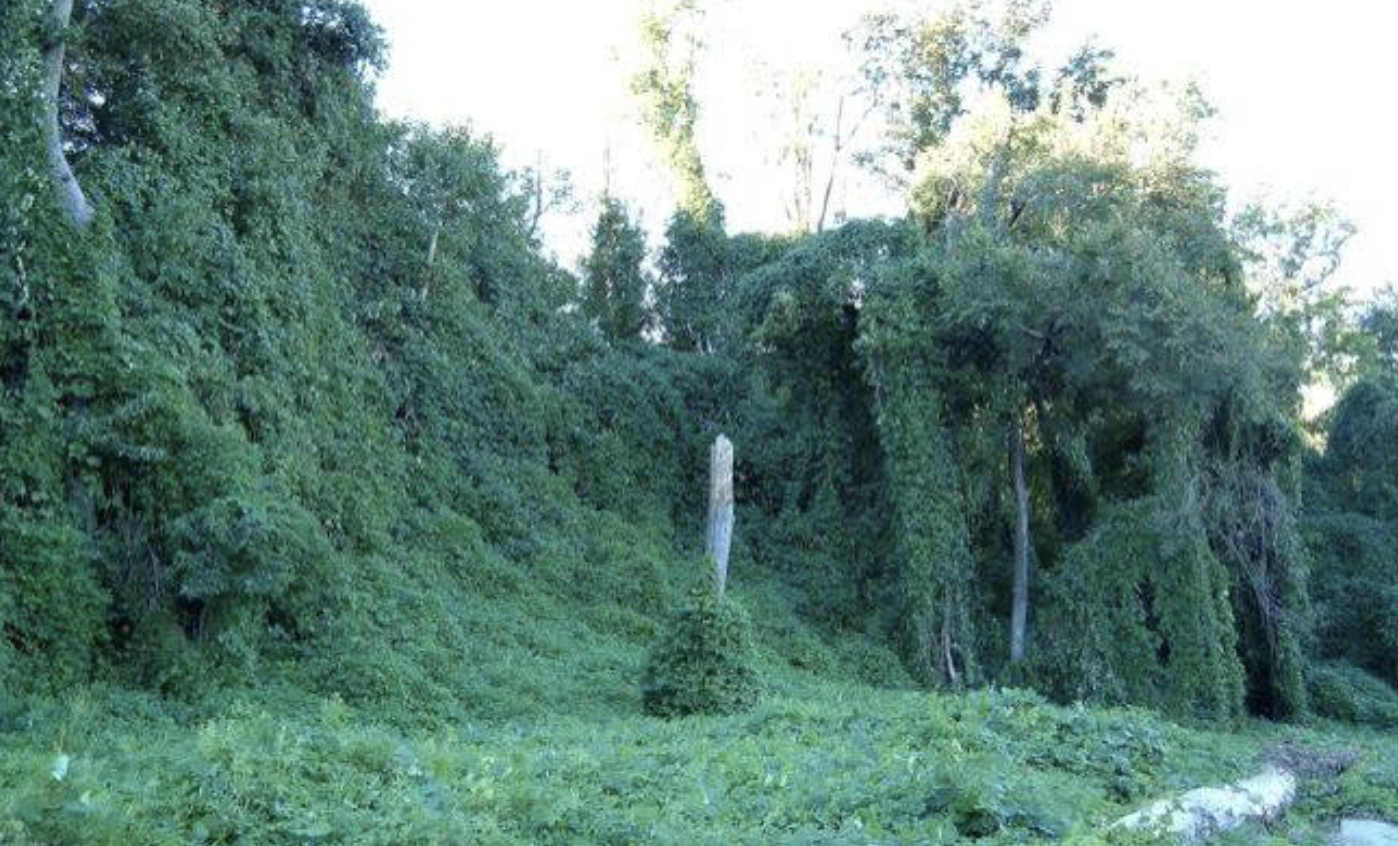
What Is an Invasive Species?
According to UF/IFAS, an invasive species is a species that is not native to a particular area, was introduced by human activity (on purpose or by accident), and causes or is likely to cause harm to the environment, the economy, or human health and well-being.
Native, Non-Native, and Invasive
Florida's plants fall into three main categories:
Native: Plants that grow naturally in Florida and evolved alongside our wildlife.
Non-native: Plants brought here by people, on purpose or by accident, usually since European contact in the 1500s.
Invasive: Non-native plants that spread on their own into our natural areas and harm native ecosystems.
You'll also hear the term Florida-friendly. Florida-friendly is not the same as native. These plants suit our conditions and aren't invasive, but many of them are non-native.
Breaking Down the Terms
Exotic: Another word for non-native. It was introduced by people. Example: bottlebrush.
Naturalized: A non-native plant that reproduces in the wild and fits into our ecosystem. Example: Spanish needle. Many botanists don't consider it native, but pollinators love it and it does well here without causing major harm.
Invasive: A naturalized plant that causes ecological or economic harm.
Noxious: A legal term for plants that are listed and regulated by the state. You cannot buy them.
In short, invasive describes what the plant does. Noxious describes what the law says.
How Florida Ranks Invasives
Category I: Already altering our ecosystems. These plants displace natives, change how plant communities are built and function, and can hybridize with native species.
Category II: Spreading and increasing in abundance, but not yet changing the ecosystem.
How Invasives Harm Florida
They crowd out natives. Dense growth takes the light, water, space, and resources native plants need.
They starve wildlife. Pollinators, birds, and other animals lose their food sources.
They change the land. Invasives can alter fire patterns, water flow, and shorelines.
They cost us all. Control on public land takes ongoing time and money.
Invasives to Know
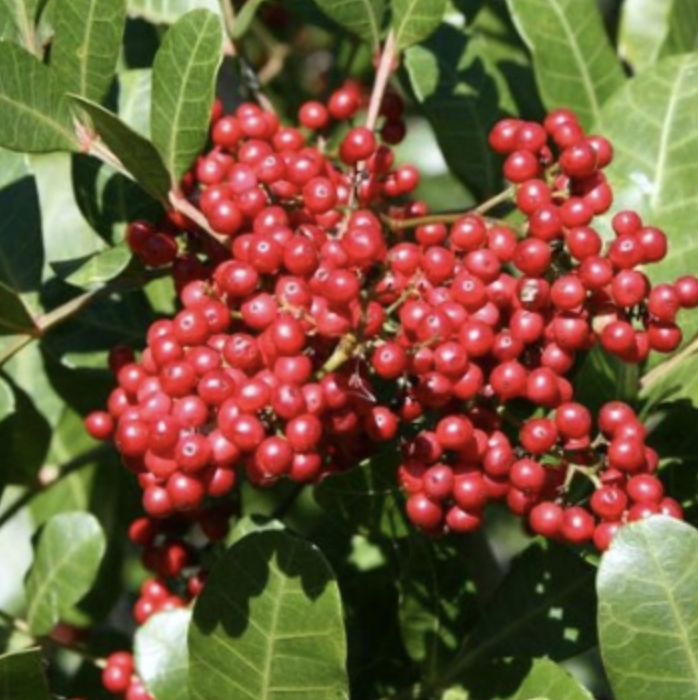
Brazilian Pepper
Brazilian pepper is related to poison ivy. Contact with the leaves, fruit, or sap can cause allergic reactions, and so can its pollen. Birds eat the berries and spread the seeds, and seeds near water can travel through it. Cutting the tree can trigger new shoots, which makes it very hard to kill and control.
When Brazilian pepper takes over, it changes the hydrology of the soil underneath. Its heavy leaf litter and chemicals poison other plants, and it forms dense, tangled thickets that shade out and displace native vegetation. It can completely change an ecosystem.
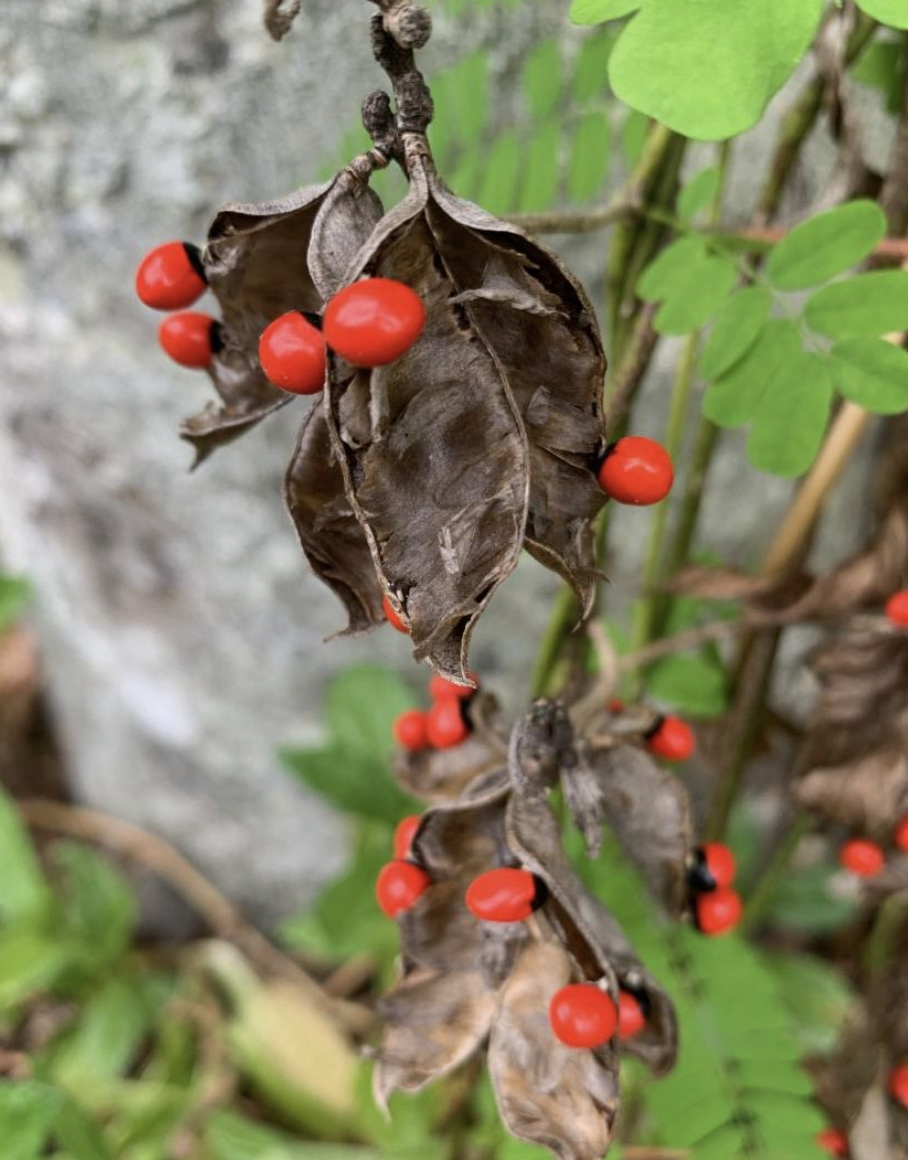
Rosary Pea
Rosary pea is common and very poisonous. Chewing or eating the seeds can cause serious poisoning, especially in kids. The seeds are bright red and black, almost like an eye, which makes them eye-catching and easy to spread.
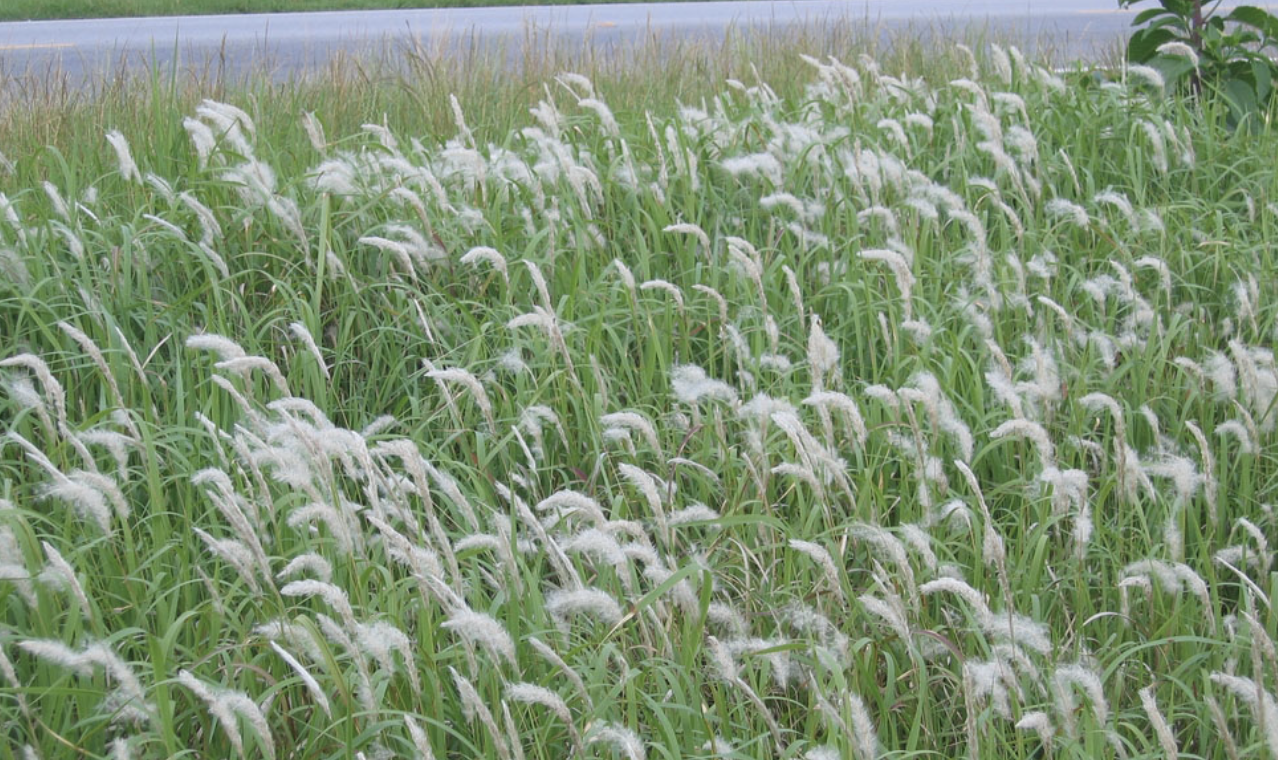
Cogongrass
Cogongrass forms very dense, tall patches where nothing else can grow. In the dry season, its leaves are highly flammable, and large patches can turn into fires that get out of hand quickly. Its rhizomes run deep, so it regrows after cutting. To remove it, you have to get all of the roots.
Four Ways to Remove Invasives
Pull or dig. Best for small plants. Get the roots, seeds, berries, and bulbs.
Solarize. Cover the ground with clear plastic during the hot summer months and let Florida's heat cook the roots and seeds underneath.
Treat. Use targeted herbicides, such as cut-stump treatment for woody plants. Always follow the label.
Hire a professional. Best for large trees or big infestations. It takes the least time but costs the most.
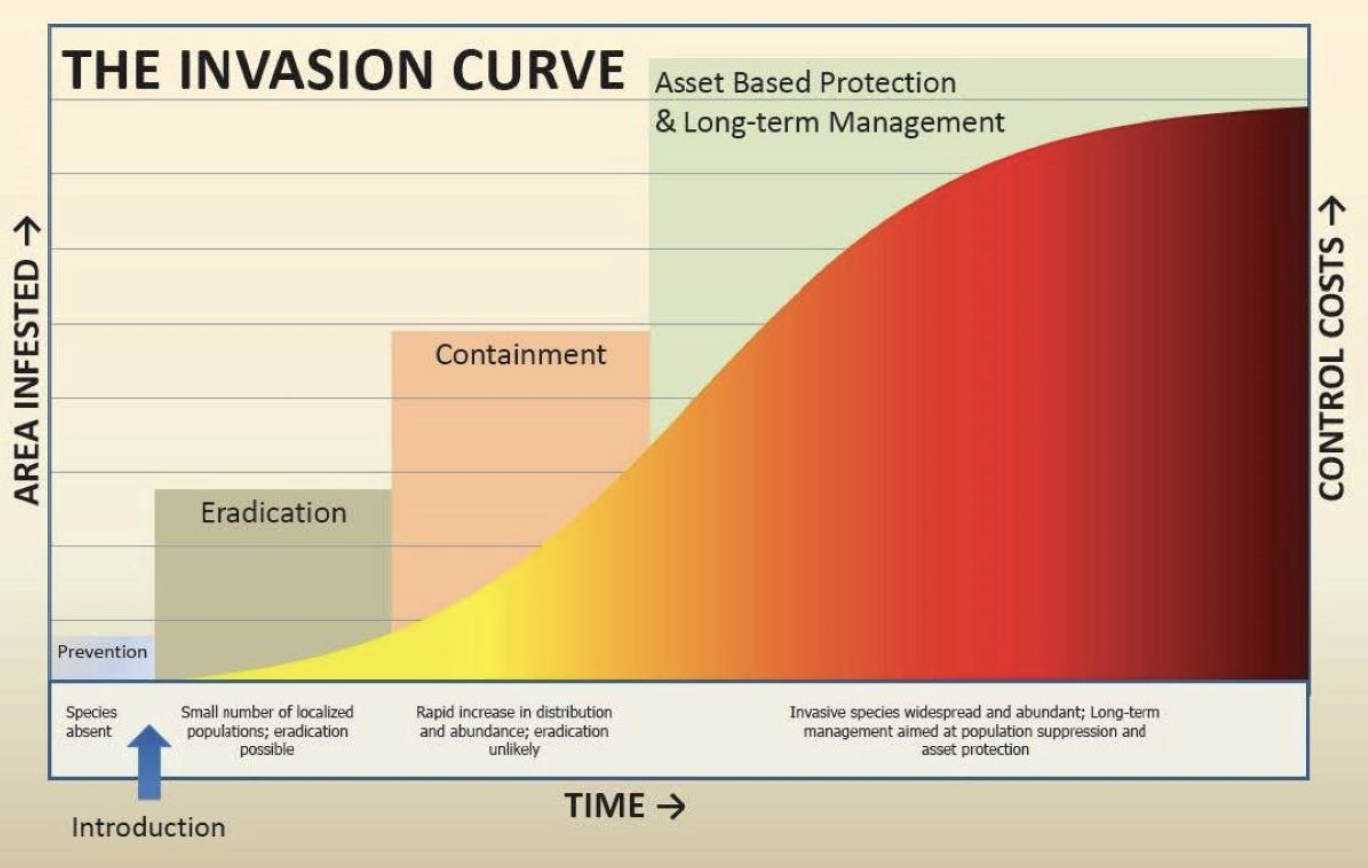
This graph from the Florida Fish and Wildlife Conservation Commission (FWC) is a great way to see how an invasion grows over time. It moves through four stages: prevention, eradication, containment, and asset-based protection with long-term management. The first step is always education. Know what isn't native, and don't plant it.
The more infested an area is, the more it costs to control. We'll never fully stop invasives from arriving, but it's our job to catch the problem early and act.
Join Us at Moccasin Lake
Moccasin Lake Nature Preserve is covered in invasives, and MAR is doing its part to remove them. Follow MAR and sign up for an invasive removal workday to help restore the preserve.
